
Programs
The Executive Program
Over the next three years, we aim to equip over 100 future health leaders with practical health diplomacy skills. This program follows a unique 'practitioner-to-practitioner' approach, connecting experienced leaders in global health with the next generation of health leaders skilled in health diplomacy
This is the primary component of the initiative and will take 25-30 mid-career global health leaders (Fellows) every year from around the world and across sectors. Demand for this program is very high following a successful first program in 2024.
We will provide an equal number of places to attendees from resource limited settings and ensure participation from both private and public sectors.
Benefits:
- Practical Learning: Engage in action-oriented experiences
- Networking: Connect with our health diplomacy community
- Research Opportunities: Contribute to pioneering studies on health diplomacy
- Career Development: New avenues for organizations to train and retain talent
2025 Year's Program
More information about 2025 years program will be available in mid-December 2024.
2024 Year’s Program
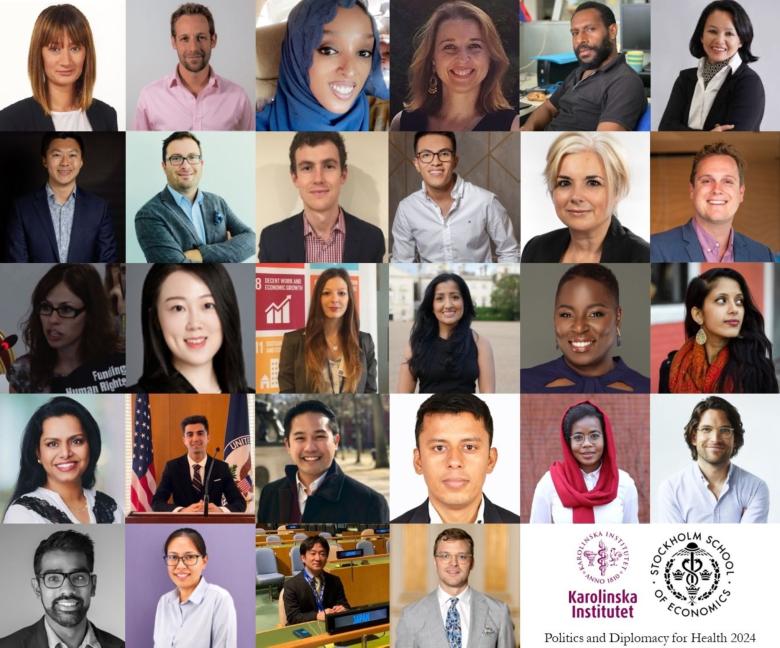
The first Politics and Diplomacy for Health fellows' program took place Q2-3 2024 with 28 mid-career professionals with 5-15 years of relevant work experience from 21 countries spanning all regions of the world, with low- and middle-income countries. 20 world recognized senior resource persons and practitioners contributed to the program as faculty.
The objectives of the program were to provide 1) skills on how to be successful in international and regional political processes and settings related to health; 2) practical advice and inspiration from more senior and experienced colleagues from case studies drawing on past and future scenarios; 3) insights into political economy as a discipline and associated tools for policy analysis; 4) an understanding of health trends and transitions in various contexts affecting people’s health; and 5) a professional network of colleagues and world-class leaders around the globe.
The program consisted of a combination of five online workshops, training, mentorship, and a 4-day master class in Sweden.